
Description
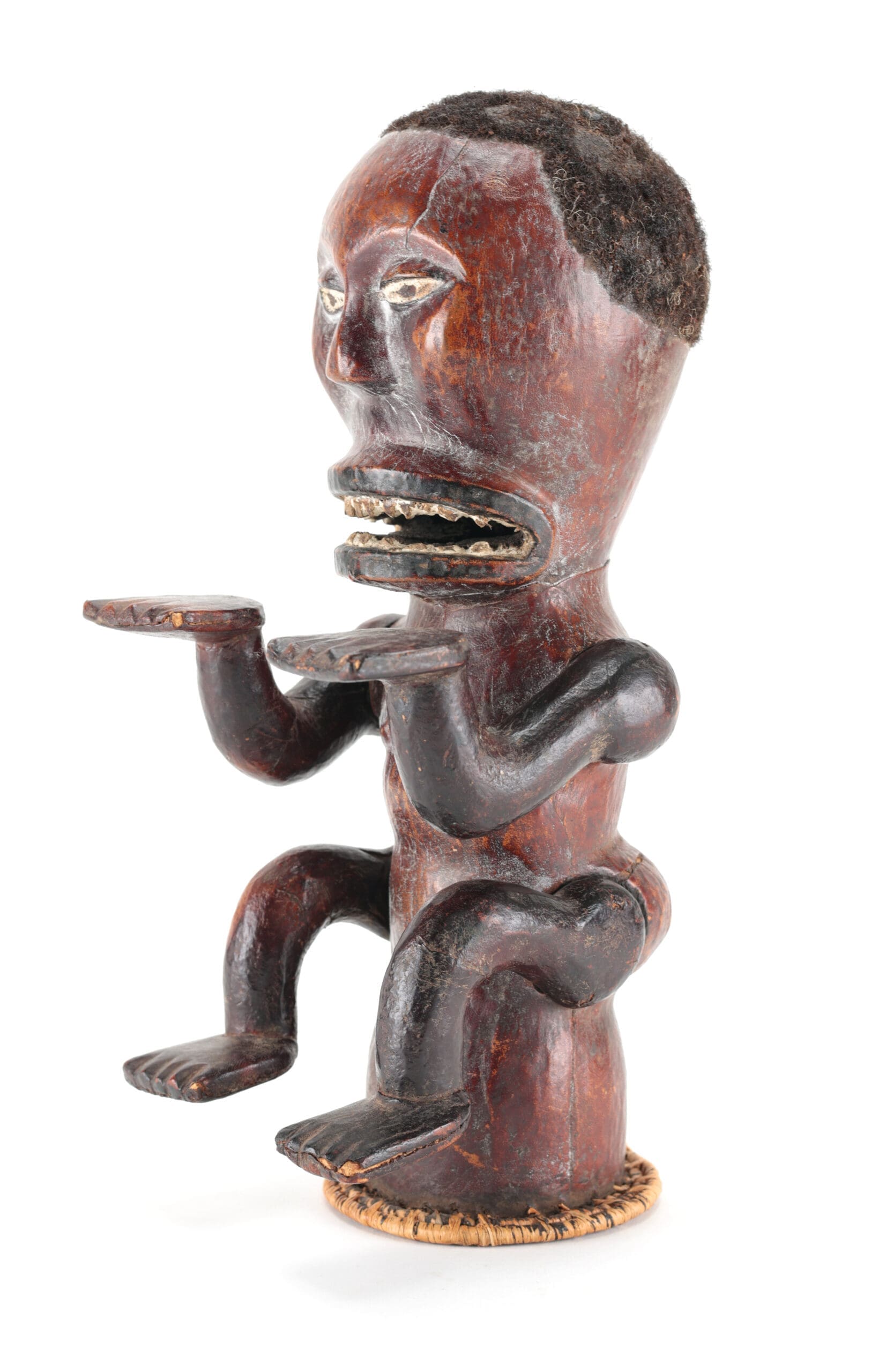
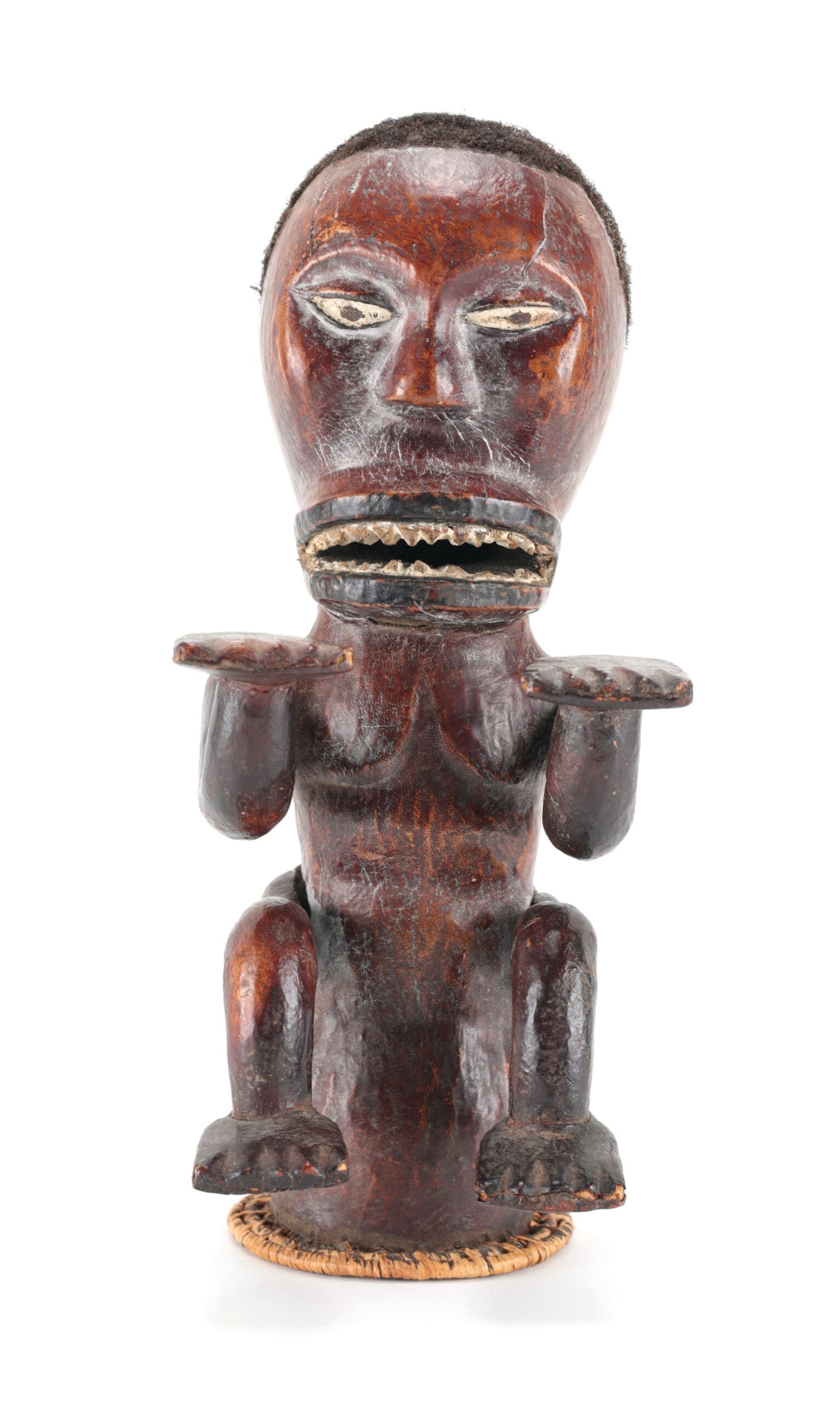
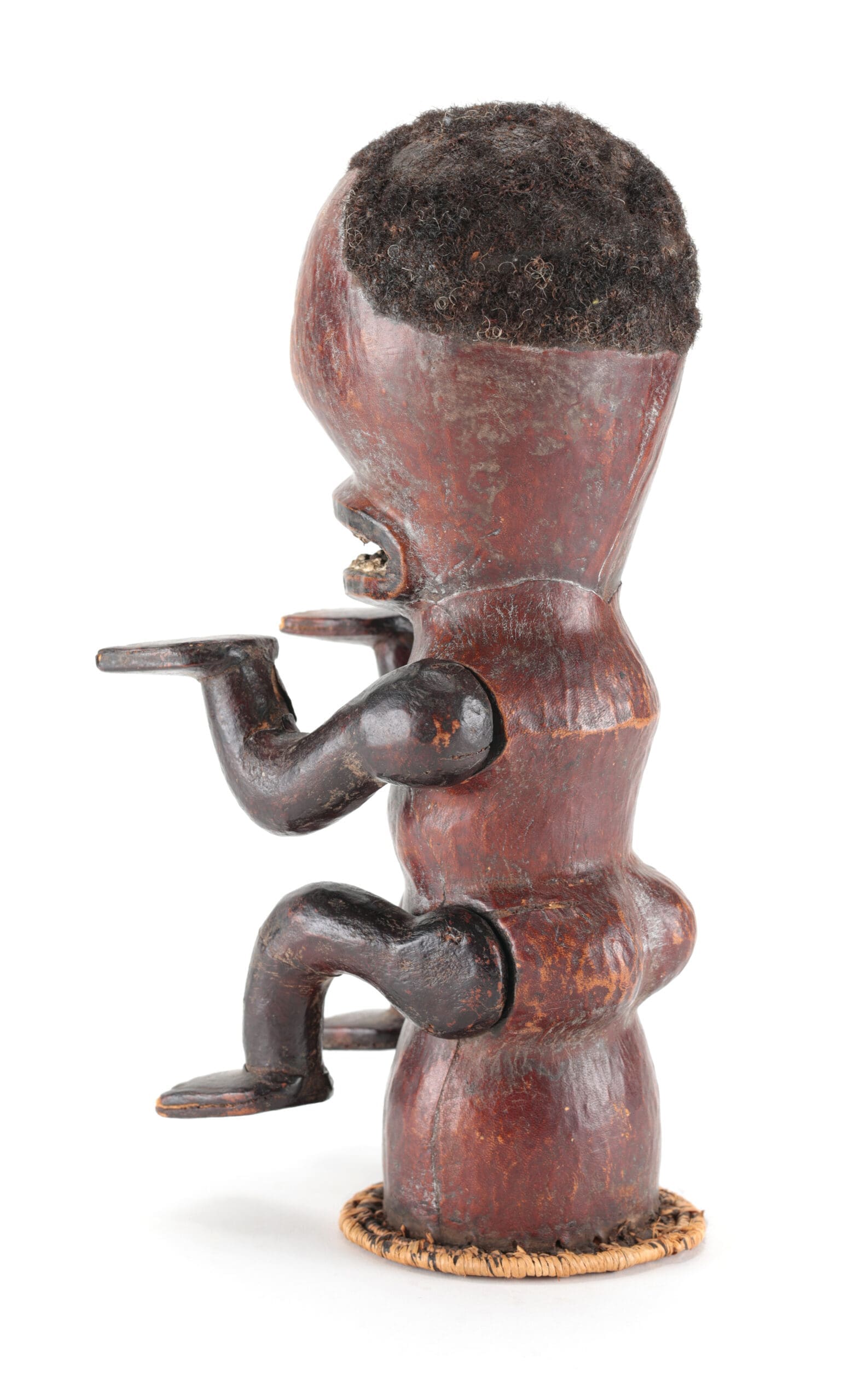
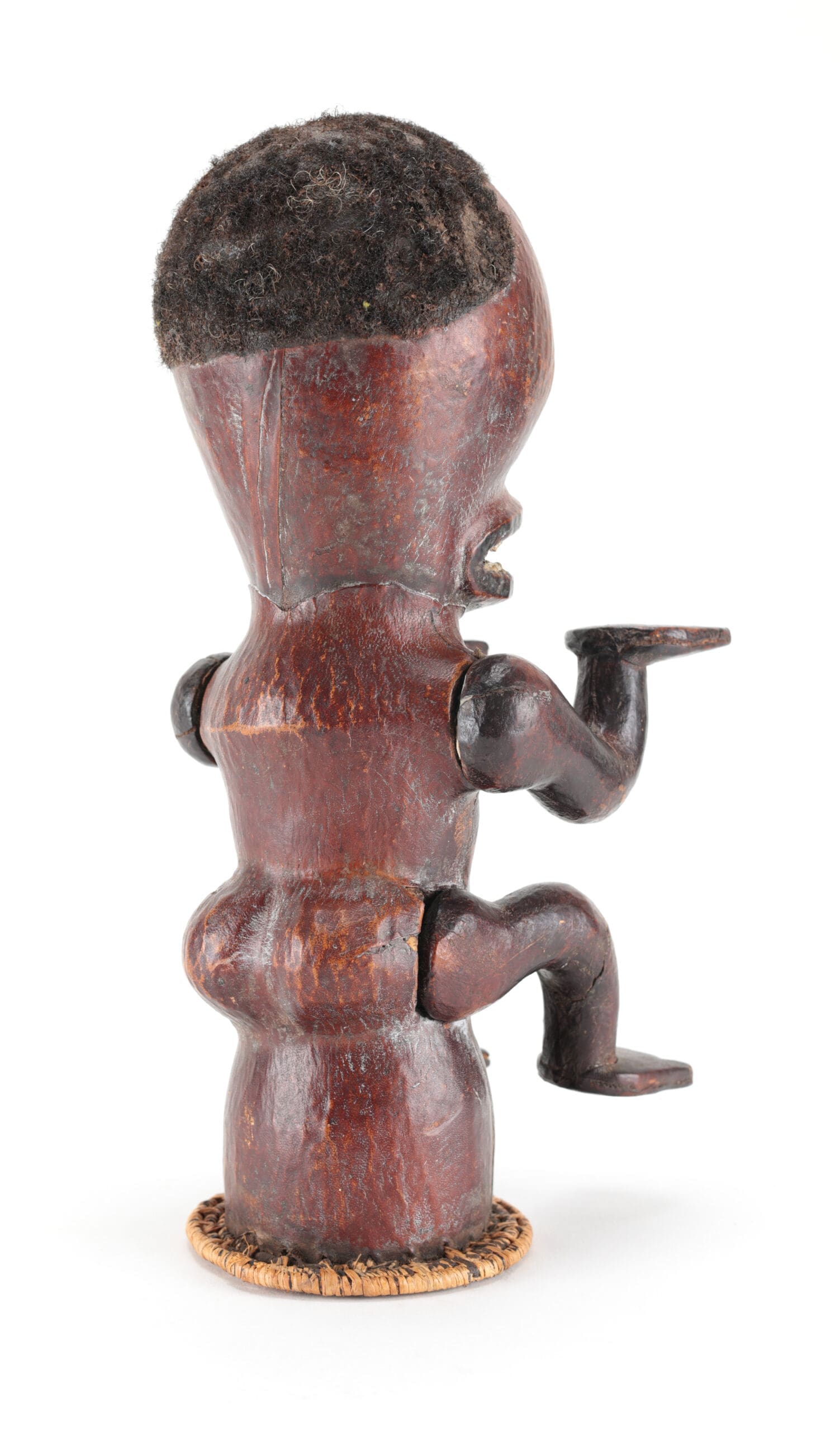
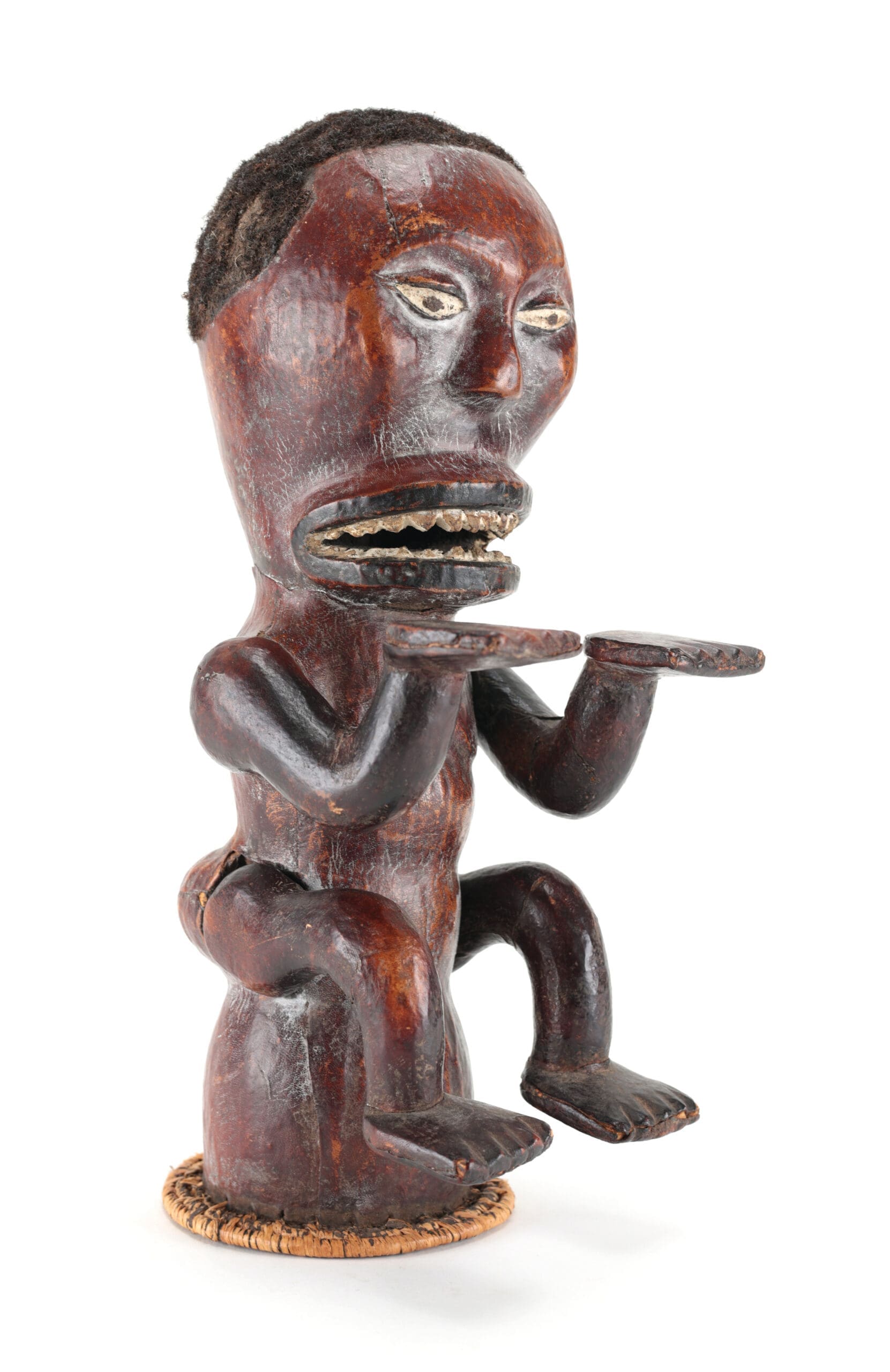
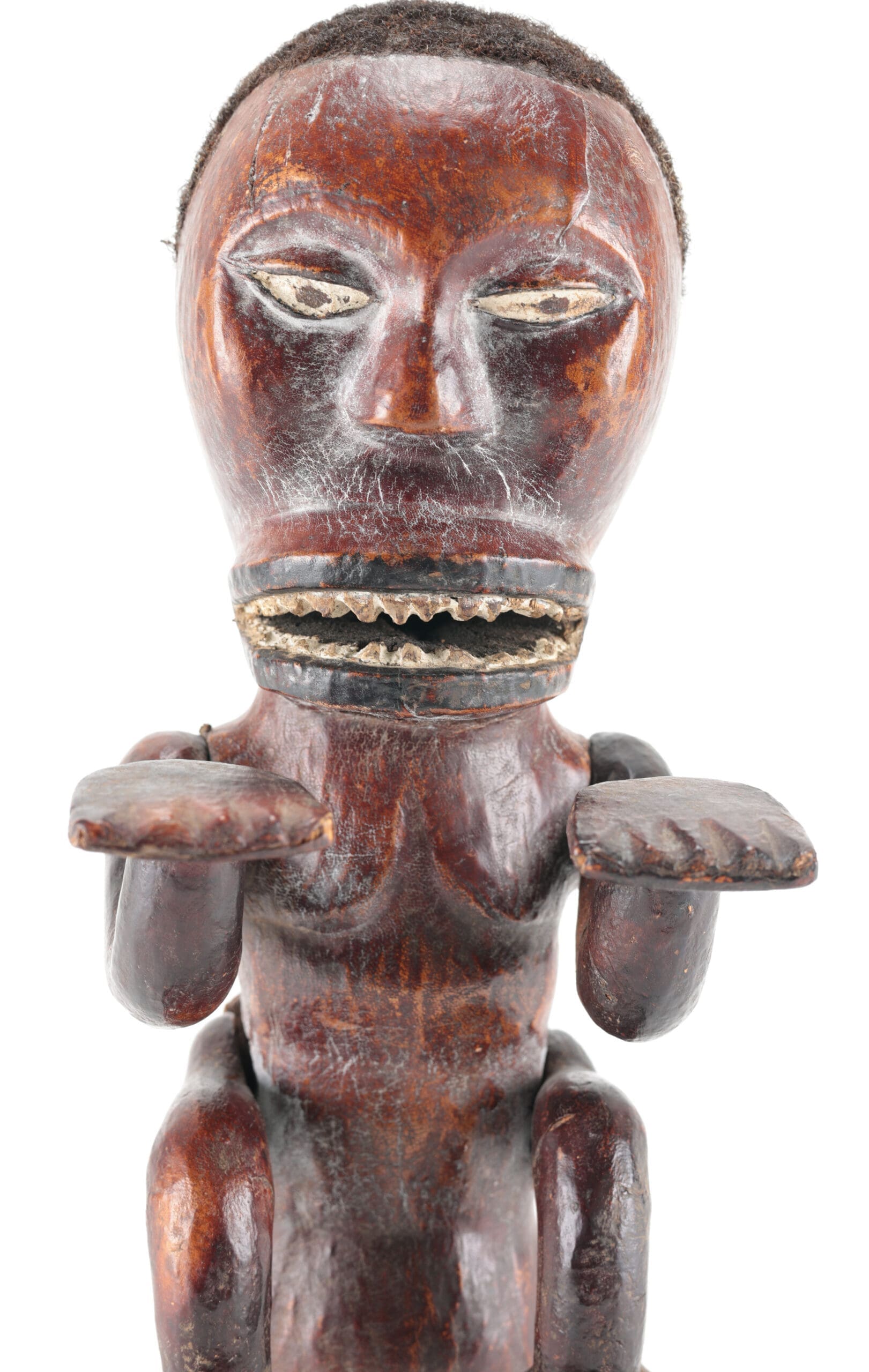
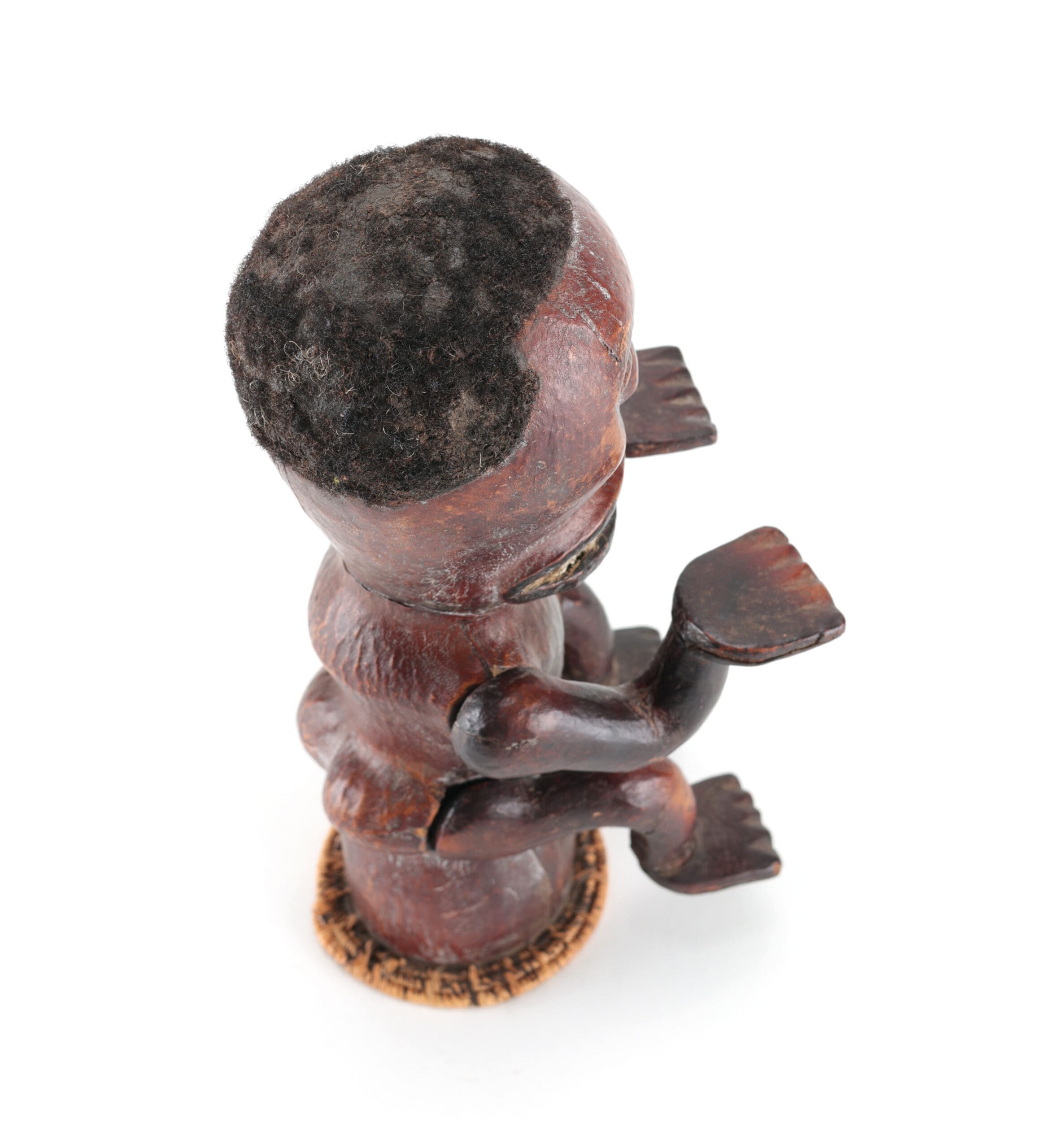
Striking anthropomorphic Tukum mask from the Widekum of the Cameroonian Grassfields, crafted from wood and basketry and largely covered with animal skin.
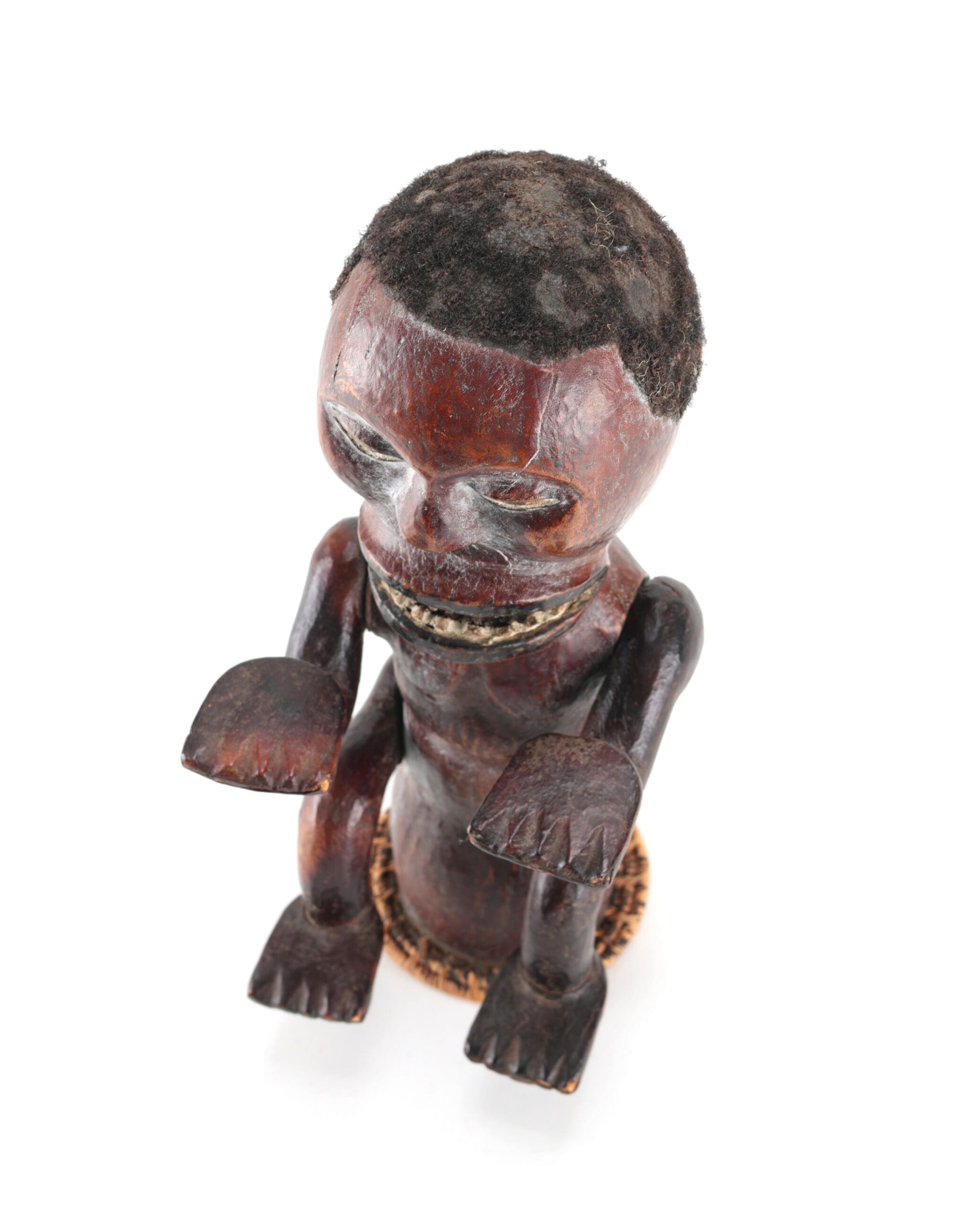
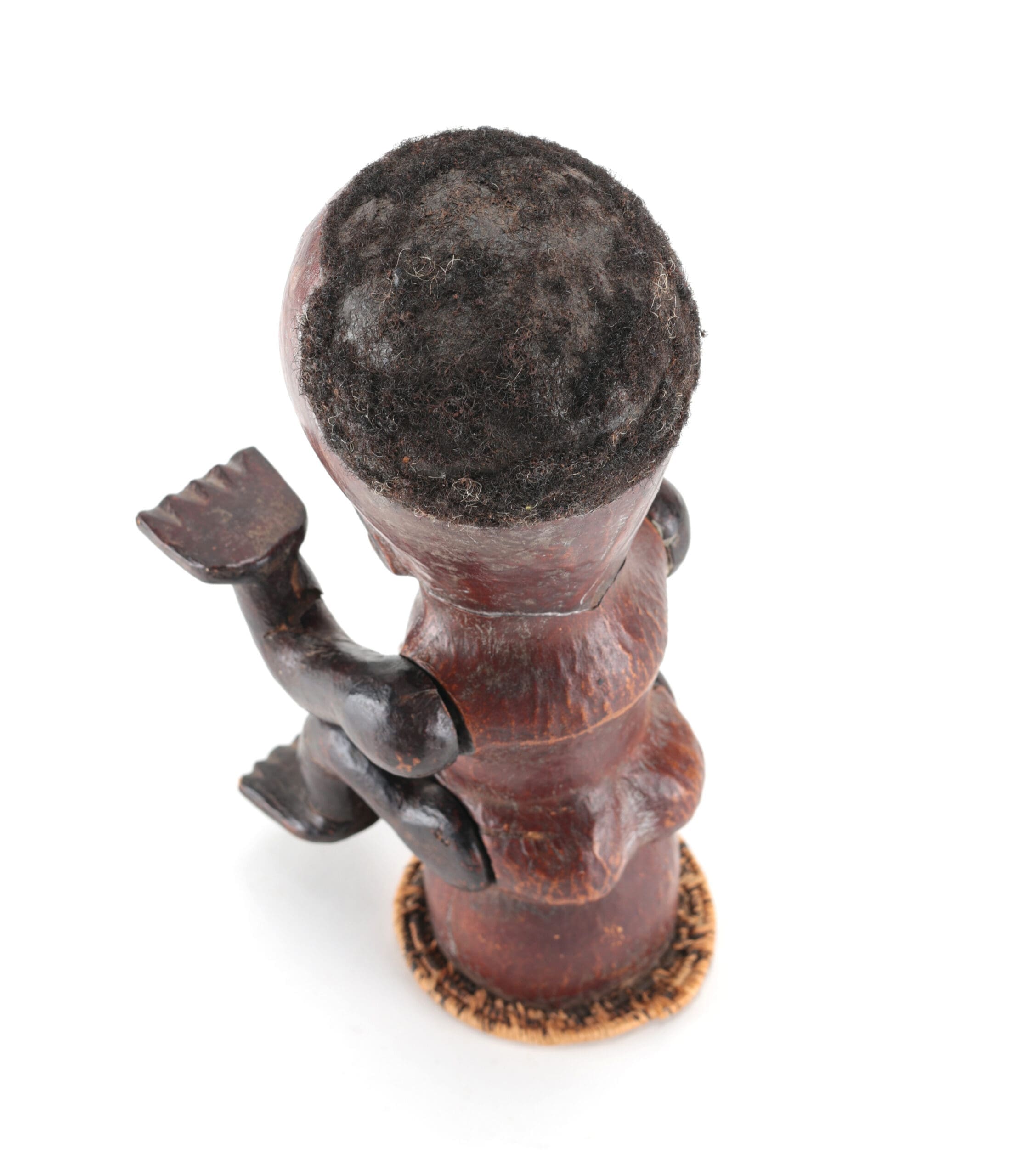
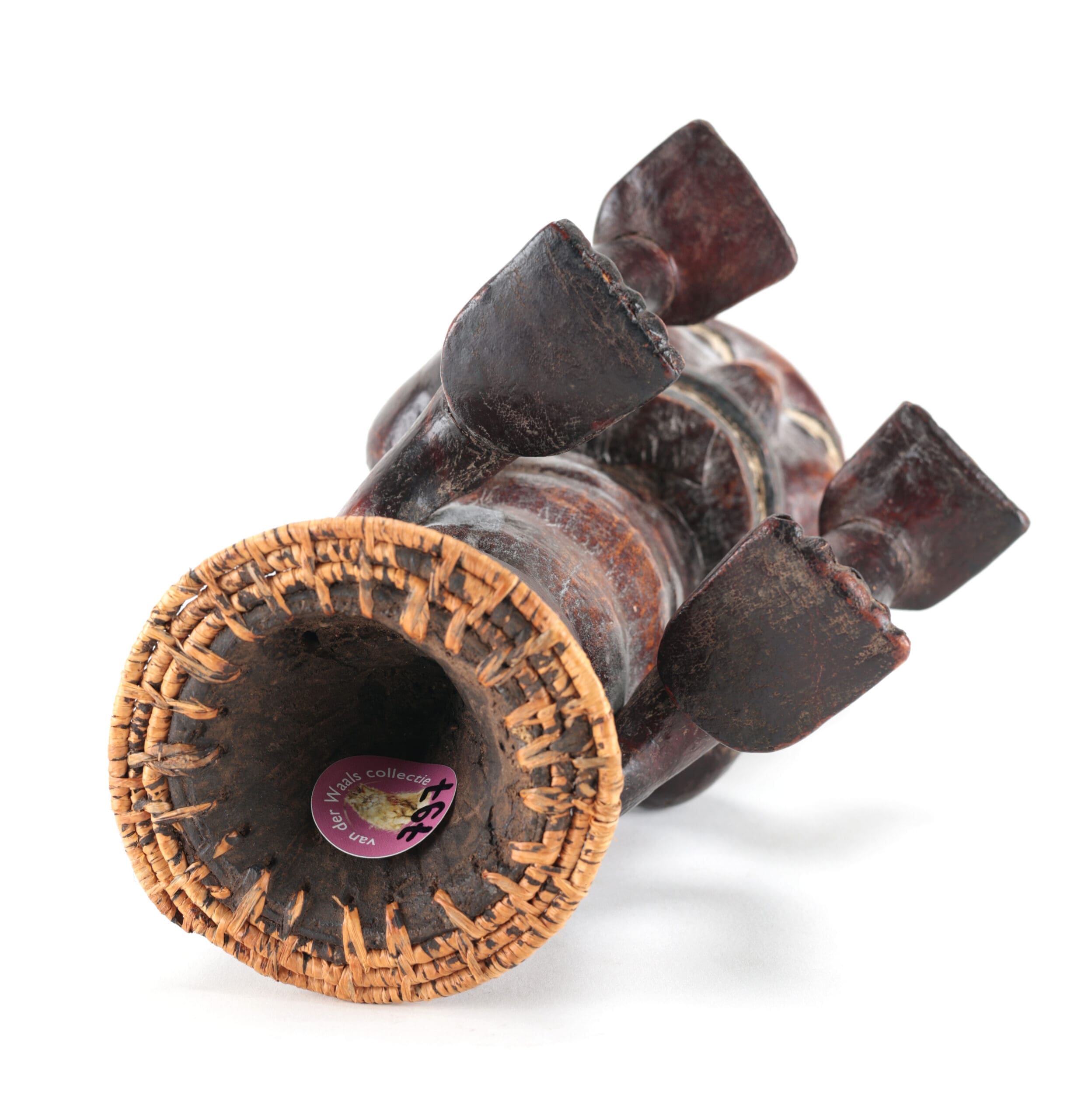
The mask depicts a human figure with an expressive face, large eyes and an open mouth. The figure is largely covered with animal skin. The individually carved wooden arms and legs have been left uncovered. Human hair, traces of kaolin and the braided base enhance the pronounced and almost theatrical character of the sculpture.
This type of mask, referred to in the international literature as a dance crest, was worn on top of the head during dances and ceremonies. The human figure rose above the dancer and was brought to life by their movements. The separately attached arms and legs enhanced the lively effect during the performance.
Tukum belong with the Widekum to a group of masks known as mpoh, a concept meaning spirit. They had both an entertaining and a ceremonial function. Tukum could perform at the funeral of an important dignitary of the nchibe society, but also appeared at celebrations surrounding important moments in life and when celebrating victories.
The combination of the expressive human representation, the various natural materials and the original function as a moving part of a dance makes Tukum a particularly sculptural object type from the Cameroonian Grassfields.
Origin & meaning
Widekum, Cameroonian Grassfields. Tukum masks belong to the mpoh tradition of the Widekum. Similar examples have been documented in wood, animal skin, human hair, kaolin and basketry, with separately crafted arms and legs.
Dimensions & condition
Height approx. 30 cm.
Wood, animal skin, human hair, kaolin and basketry. The figure is largely covered with animal skin; arms and legs are carved separately from wood. Signs of age and use, wear and tear, and localized losses consistent with age and original use. See the photographs for a complete impression of the condition.

 Nederlands
 English
 Français
 Deutsch
 Italiano
 Español